19 март 2026, 21:4319.03.26
26.02.25
1
THANK YOU FOR YOU GAMES, I LOVE THIS GAMES

Hey everyone! We've started the rollout for our next major update, which should be available for everyone this Friday.
ver. 1.49.0
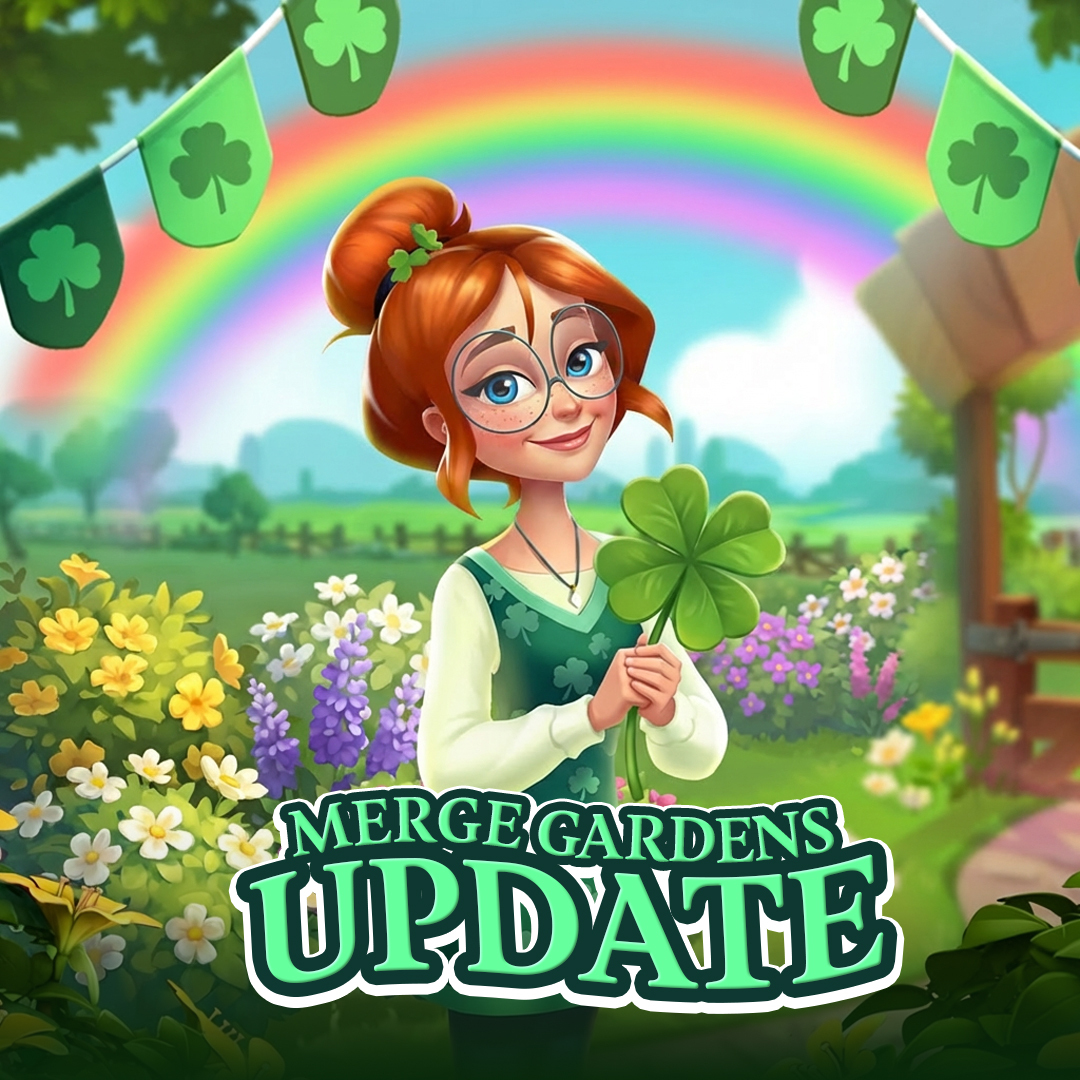
🍀 ST. PATRICK’S DAY
St. Patrick’s magic has arrived in Myrtle Grove! For two weeks, join Daisy on festive missions filled with blooming clovers and sparkling rewards. Complete special tasks to unlock themed prizes and limited-time offers, including some high-value surprises. Don’t miss your chance to catch the rare Gliding Lizard. Coming soon.
📚 NEW EVENT - THE LOST STUDY
We’re super excited to announce a brand new exploration quest Event! Collect Event Tokens from completed Puzzles, unlock new exciting Boxes and find enough Vials to progress. Find all Vials for amazing rewards! Coming soon.
💎 GIVEAWAY
Free Gems and helpful fellow gardeners? This time our exclusive community giveaway happens on Reddit! Join us and find the latest giveaway post under the community highlights: https://www.reddit.com/r/MergeGardens/
⚙️ FIXES & IMPROVEMENTS
 i
iTHANK YOU FOR YOU GAMES, I LOVE THIS GAMES

Great breakdown — this is exactly the kind of problem everyone runs into when learning or working with multiple tools at the same time. Do you think it’s better to rely on official documentation only, or to build your own “quick reference” system as you go?

Great breakdown — this is exactly the kind of problem everyone runs into when learning or working with multiple tools at the same time. Do you think it’s better to rely on official documentation only, or to build your own “quick reference” system as you go?
From my experience, sticking only to documentation slows you down a lot because you keep re-searching the same things. What works better is a hybrid approach: use docs for correctness, but gradually build your own short notes with the commands, patterns, or snippets you actually use in real work. Over time it becomes a personal cheat sheet that saves a lot of time and context switching. There’s a good explanation of this idea here — https://quickref.me/blog/cheat-sheets-vs-documentation-stop-drowning-in-tabs-and-build-fast-notes-for-any-stack/ — and the main idea is to reduce friction so you spend more time building and less time searching.

I recently found some interesting information and learned that AI offers a significant advantage. Unlike humans, it can process thousands of parameters simultaneously—from licenses to user behavior. Projects like GmblWiki gmblwiki.com use this approach to remove subjectivity and present more accurate data. As a result, users receive not just an overview, but a systematic analysis. This makes the process of choosing a platform more transparent and understandable, especially for beginners.


